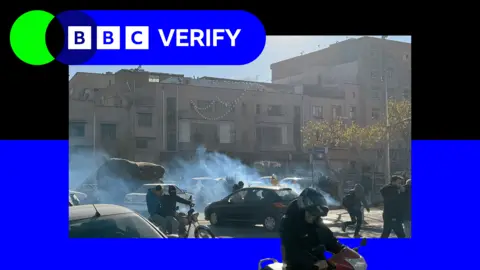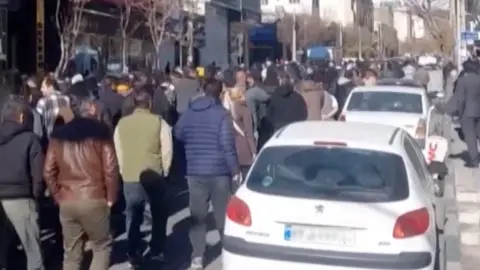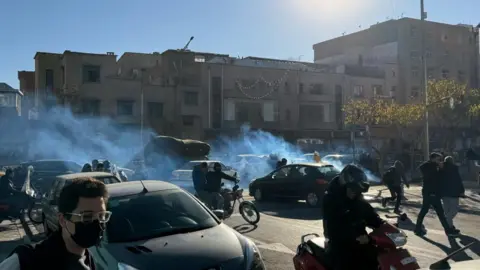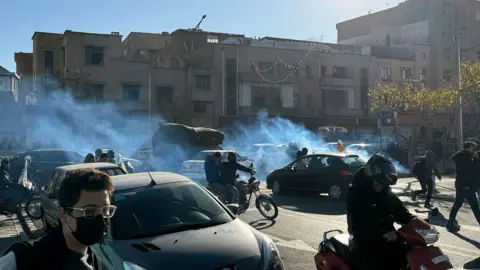
Iran is experiencing one of its most significant waves of protests in recent years, with demonstrations erupting amid a dire economic situation characterized by soaring inflation and a sharply devalued currency. The protests began on December 28, initially as a response to rising costs, but quickly morphed into widespread calls for political change.
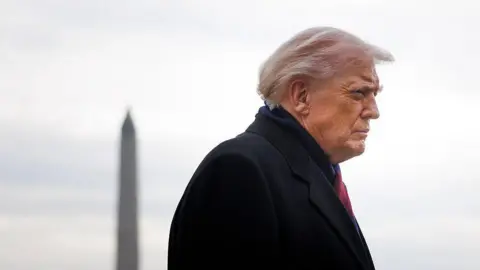
On Monday, as the demonstrations entered their ninth day, US President Trump issued alarming warnings to Iranian leaders regarding their treatment of protesters, declaring they were 'locked and loaded'—a rare intervention that could embolden protestors further. Human rights groups report that more than 20 deaths have occurred due to police violence, adding urgency to the situation.
The protests are not just rooted in economics; public anger is also directed at governmental corruption, with many citizens believing that elites are exploiting the current economic crisis for personal gain. As inflation rates soar above 42%, and food prices exceed 70%, the realities of life for ordinary Iranians are increasingly grim.
Public demonstrations initially started in Tehran's Grand Bazaar, where merchants sought government action to stabilize the economy but have since spread to include more political slogans calling for the end of the Islamic Republic. Recent protests, reminiscent of the 'Mahsa Movement' sparked by the tragic death of Mahsa Amini, showcase the regime's vulnerability due to internal pressures and external sanctions.
Moreover, forget about the domestic situation; international dynamics have shifted significantly against Iran, particularly following military confrontations with Israel that devastated Iran’s military capabilities. As these protests grow, observers note that Iran's leadership appears to be at its weakest point in decades, facing mounting pressure both from its citizens and from a challenging international landscape.
On Monday, as the demonstrations entered their ninth day, US President Trump issued alarming warnings to Iranian leaders regarding their treatment of protesters, declaring they were 'locked and loaded'—a rare intervention that could embolden protestors further. Human rights groups report that more than 20 deaths have occurred due to police violence, adding urgency to the situation.
The protests are not just rooted in economics; public anger is also directed at governmental corruption, with many citizens believing that elites are exploiting the current economic crisis for personal gain. As inflation rates soar above 42%, and food prices exceed 70%, the realities of life for ordinary Iranians are increasingly grim.
Public demonstrations initially started in Tehran's Grand Bazaar, where merchants sought government action to stabilize the economy but have since spread to include more political slogans calling for the end of the Islamic Republic. Recent protests, reminiscent of the 'Mahsa Movement' sparked by the tragic death of Mahsa Amini, showcase the regime's vulnerability due to internal pressures and external sanctions.
Moreover, forget about the domestic situation; international dynamics have shifted significantly against Iran, particularly following military confrontations with Israel that devastated Iran’s military capabilities. As these protests grow, observers note that Iran's leadership appears to be at its weakest point in decades, facing mounting pressure both from its citizens and from a challenging international landscape.