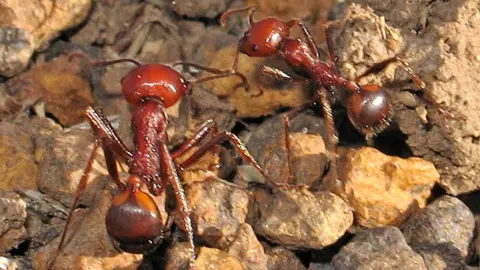
The ants are flying in Kenya at the moment. During this rainy season, swarms can be seen leaving the thousands of anthills in and around Gilgil, a quiet agricultural town in Kenya’s Rift Valley that has emerged as the center of a booming illegal trade. The mating ritual sees winged males leave the nest to impregnate queens, who also take flight at this time. This makes it the perfect opportunity to chase down queen ants to sell to smugglers who are at the heart of a growing global black market, tapping into the pet craze for observing ants as they build colonies in transparent enclosures.
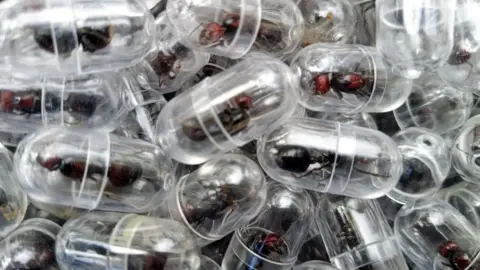
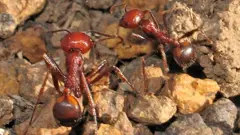
Giant African harvester ant queens, with their large reddish appearance, are particularly coveted, fetching prices of up to £170 ($220) on the black market. A single fertilized queen can establish an entire colony and can live for decades, making them a lucrative target for poachers as they can be discreetly transported in test tubes or syringes without attracting much attention during travel.
During the past year, the scale of the illicit trade became evident when authorities found 5,000 giant harvester ant queens alive in a guesthouse, with plans to export them to markets in Europe and Asia. Experts express concern that such trafficking can disrupt ecosystems, as ants play vital roles in their environments as seed dispersers and stabilizers of soil health.
Kenya's cabinet is considering policy guidelines to commercialize the ant trade sustainably, proposing that harvesting could be regulated with proper permits and community agreements. However, for now, illegal methods remain prevalent, endangering ant populations and risking ecological balance, as well as drawing attention to the greater problem of wildlife trafficking.
Giant African harvester ant queens, with their large reddish appearance, are particularly coveted, fetching prices of up to £170 ($220) on the black market. A single fertilized queen can establish an entire colony and can live for decades, making them a lucrative target for poachers as they can be discreetly transported in test tubes or syringes without attracting much attention during travel.
During the past year, the scale of the illicit trade became evident when authorities found 5,000 giant harvester ant queens alive in a guesthouse, with plans to export them to markets in Europe and Asia. Experts express concern that such trafficking can disrupt ecosystems, as ants play vital roles in their environments as seed dispersers and stabilizers of soil health.
Kenya's cabinet is considering policy guidelines to commercialize the ant trade sustainably, proposing that harvesting could be regulated with proper permits and community agreements. However, for now, illegal methods remain prevalent, endangering ant populations and risking ecological balance, as well as drawing attention to the greater problem of wildlife trafficking.