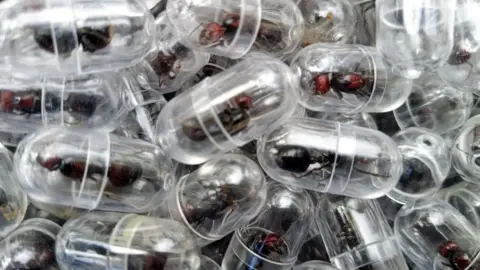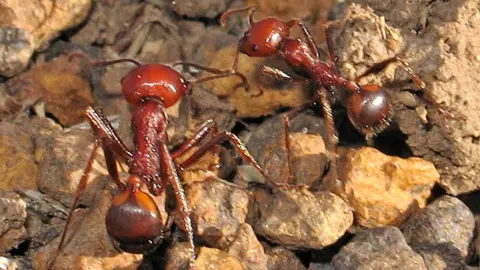
The giant African harvester ants are currently swarming in Kenya, becoming the focus of a burgeoning illegal trade due to the mating season. The black market for ants has emerged around Gilgil, where collectors target the red queen ants, each capable of fetching up to $220. These queens, being able to start their own colonies and live for decades, are especially sought after.
Illegal collection methods involve disturbing nests and are often linked to international smuggling networks. Authorities recently discovered a large consignment of 5,000 queen ants in Naivasha, raising alarms about the scale of this trade. Environmental scientists warn that the loss of queen ants could disrupt local ecosystems and biodiversity, as they play a crucial role in seed dispersal and maintaining grassland health.
While it is possible to harvest ants legally in Kenya, without appropriate licensing and monitoring, the vast majority of trade continues unregulated. Conservationists argue for stronger protections and sustainable practices to balance market demand with the ecological needs of local habitats.
Illegal collection methods involve disturbing nests and are often linked to international smuggling networks. Authorities recently discovered a large consignment of 5,000 queen ants in Naivasha, raising alarms about the scale of this trade. Environmental scientists warn that the loss of queen ants could disrupt local ecosystems and biodiversity, as they play a crucial role in seed dispersal and maintaining grassland health.
While it is possible to harvest ants legally in Kenya, without appropriate licensing and monitoring, the vast majority of trade continues unregulated. Conservationists argue for stronger protections and sustainable practices to balance market demand with the ecological needs of local habitats.