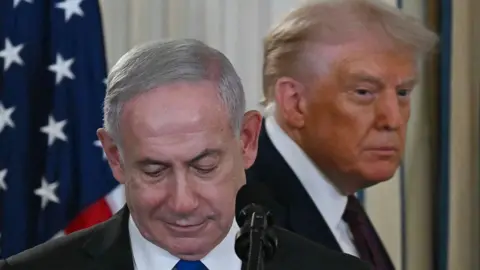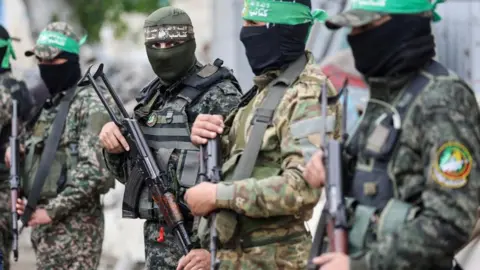
Hamas has rejected the disarmament plan of a top figure in President Donald Trump's Gaza peace efforts, a senior Palestinian official familiar with the negotiations has told the BBC. He accused Nickolay Mladenov, the high representative for Gaza on the US-led Board of Peace, of bias towards Israel. Last month, Mladenov outlined a framework for Gaza's demilitarisation as part of the second phase of the ceasefire deal agreed by Hamas and Israel in October.
The official said Hamas told regional mediators that it would not engage in talks on the second phase until Israel fully implemented the terms of the first phase. Israel has said it will not move forward without progress on Hamas's disarmament. A Hamas delegation in Cairo was due to meet Egypt's intelligence chief on Tuesday before departing.
The first phase of Trump's peace plan halted the war, returned all Israeli hostages still held by Hamas in exchange for Palestinian prisoners held by Israel, and saw Israeli forces withdraw partially from Gaza.
In mid-January, US Middle East envoy Steve Witkoff announced the start of phase two of Trump's plan to end the war, but there has been deadlock between Israel and Hamas since then. The second phase is meant to lead to a permanent end to the war following Gaza's demilitarisation and a full Israeli withdrawal.
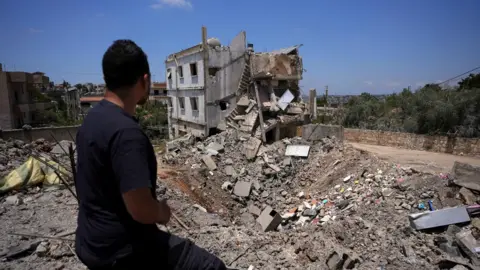
Last month, Mladenov laid out a detailed plan for Palestinian armed groups in Gaza to decommission their weapons - linking compliance to the start of reconstruction following Israel's military campaign which devastated the territory. It was triggered by the Hamas-led attack on Israel on 7 October 2023 in which about 1,200 people were killed and 251 others taken to Gaza as hostages.
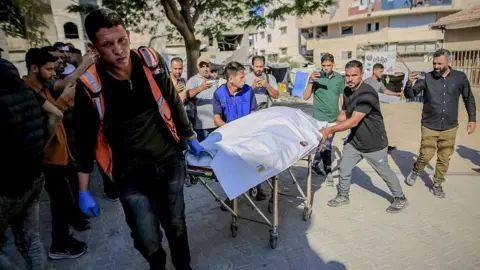
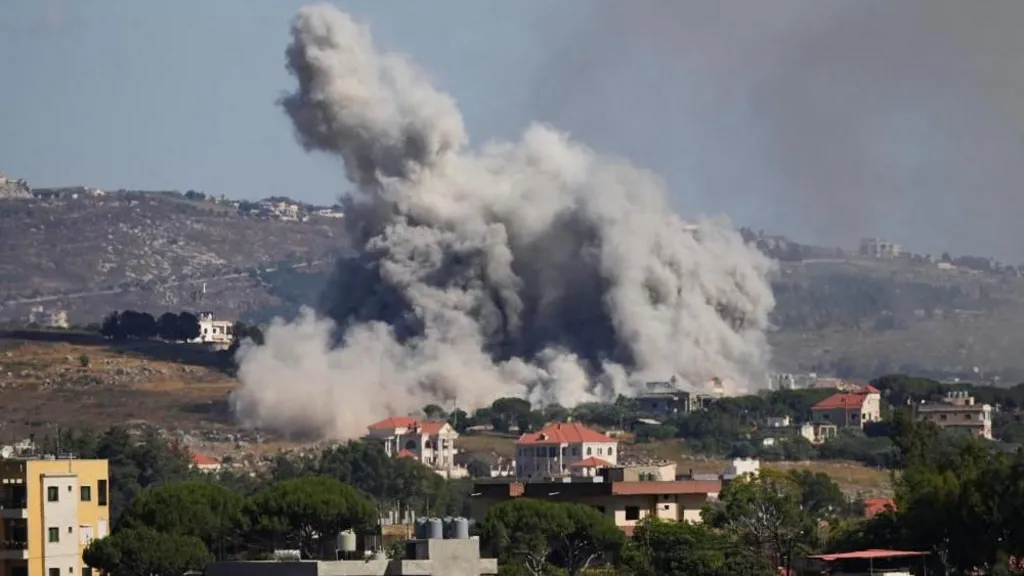
More than 72,330 people have been killed by Israeli military action Gaza since then - including 757 since the ceasefire began on 10 October 2025, according to the territory's Hamas-run health ministry.
A senior Hamas official told the BBC: We are waiting for Mladenov to provide a clear timetable for Israel to fulfil the remaining obligations of phase one, along with guarantees to halt Israeli violations, before any discussion of phase two begins.
He added that Palestinian factions considered the issue of weapons to be tied to a comprehensive solution that guaranteed the Palestinian people's right to self-determination, rather than partial arrangements.
The official said Hamas and other factions had informed mediators during meetings in Cairo that they would not begin any talks on the second phase without a complete halt to Israeli violations, attacks, killings and the ongoing starvation, as well as full implementation of phase one.
According to officials, Hamas is demanding a full Israeli withdrawal from Gaza, alongside the deployment of international protection forces to assist local police in protecting civilians. A second Hamas official outlined a list of remaining requirements for phase one, including military withdrawals, the reopening of crossings, and humanitarian aid provisions. Mladenov's vision is reportedly aligned with Israeli positions, complicating efforts toward peace and reconstruction.
The official said Hamas told regional mediators that it would not engage in talks on the second phase until Israel fully implemented the terms of the first phase. Israel has said it will not move forward without progress on Hamas's disarmament. A Hamas delegation in Cairo was due to meet Egypt's intelligence chief on Tuesday before departing.
The first phase of Trump's peace plan halted the war, returned all Israeli hostages still held by Hamas in exchange for Palestinian prisoners held by Israel, and saw Israeli forces withdraw partially from Gaza.
In mid-January, US Middle East envoy Steve Witkoff announced the start of phase two of Trump's plan to end the war, but there has been deadlock between Israel and Hamas since then. The second phase is meant to lead to a permanent end to the war following Gaza's demilitarisation and a full Israeli withdrawal.
Last month, Mladenov laid out a detailed plan for Palestinian armed groups in Gaza to decommission their weapons - linking compliance to the start of reconstruction following Israel's military campaign which devastated the territory. It was triggered by the Hamas-led attack on Israel on 7 October 2023 in which about 1,200 people were killed and 251 others taken to Gaza as hostages.
More than 72,330 people have been killed by Israeli military action Gaza since then - including 757 since the ceasefire began on 10 October 2025, according to the territory's Hamas-run health ministry.
A senior Hamas official told the BBC: We are waiting for Mladenov to provide a clear timetable for Israel to fulfil the remaining obligations of phase one, along with guarantees to halt Israeli violations, before any discussion of phase two begins.
He added that Palestinian factions considered the issue of weapons to be tied to a comprehensive solution that guaranteed the Palestinian people's right to self-determination, rather than partial arrangements.
The official said Hamas and other factions had informed mediators during meetings in Cairo that they would not begin any talks on the second phase without a complete halt to Israeli violations, attacks, killings and the ongoing starvation, as well as full implementation of phase one.
According to officials, Hamas is demanding a full Israeli withdrawal from Gaza, alongside the deployment of international protection forces to assist local police in protecting civilians. A second Hamas official outlined a list of remaining requirements for phase one, including military withdrawals, the reopening of crossings, and humanitarian aid provisions. Mladenov's vision is reportedly aligned with Israeli positions, complicating efforts toward peace and reconstruction.