In brief
A sudden flood on the Budhi Gandaki River in Nepal’s Gorkha district washed away over 200 homes, several suspension bridges and damaged a hydropower project. Rescue teams saved 95 people, including foreigners, but 5 remain missing. The timespan of the flood was brief yet violent, with water levels jumping from 2 to 8.5 meters in a few hours. The incident follows a devastating August disaster that killed 1,400 people along the Nepal‑Tibet border. Experts highlight climate change as a key factor, as melting glaciers and unpredictable weather intensify the risk of such floods.
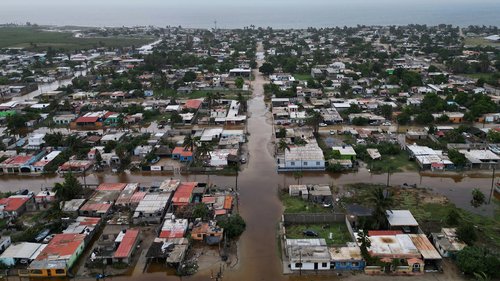
When the Budhi Gandaki River burst its banks on Sunday, the Gorkha district was hit with a flash flood that swept away more than 200 homes, several suspension bridges and even a hydropower site. The army’s rescue mission pulled 95 people—nine of them foreigners—out of the water, but five people are still missing.
The flood’s speed was terrifying. In just a few hours, water levels at one spot rose from 2 metres (6 ft 5 in) to 8.5 metres (27 ft 9 in). A video of the event shows the whole valley turning into a rushing river, overturning cars and destroying a building complex.
Local residents like Ganesh Karki of Jagatbagar escaped by climbing roughly 500 m uphill to a forest sanctuary after an early warning call. “We never imagined a flood of this size,” he said. “The water surged for about 15 minutes and then stopped repeatedly. We’re afraid to return home at night.”
The disaster also damaged a hydroelectric project, where construction equipment was swept away, and a hydrological station located upstream was completely destroyed, cutting off data for scientists.
Experts say the flood was likely caused by a landslide that temporarily blocked the river, creating a natural dam that burst when the ice‑avalanche or water overtopped it. Climate change, which accelerates glacier melt in the Himalayas, is seen as a major driver of these high‑risk events.
In the wake of the recent August floods that killed over 1,400 people along the Nepal‑Tibet border, authorities have placed Nepal on high alert. Save the Children is fielding an emergency team, and the army has deployed four helicopters to keep searching for missing people.