From Mariia's 16th-floor flat, the calm waters of the Black Sea stretch out into the horizon beneath the fading twilight. Up here you can see and hear when the drones come, she says with a mix of fear and resignation. Her daughter Eva, only nine, is already accustomed to identifying the sounds of impending danger, finding solace in her daily routine of checking social media for updates during air raid alerts.
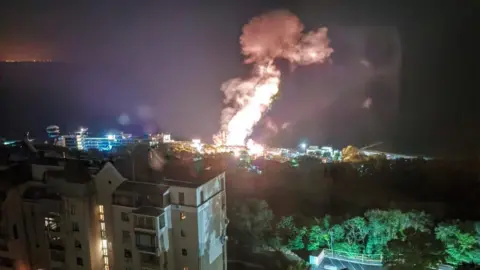
Despite nearly four years of conflict following Russia's invasion, Odesa, Ukraine's third-largest city, has recently faced a wave of renewed drone attacks targeting critical infrastructure. The situation has created a profound sense of unease among residents who now contemplate an uncertain future amid diminishing safety.
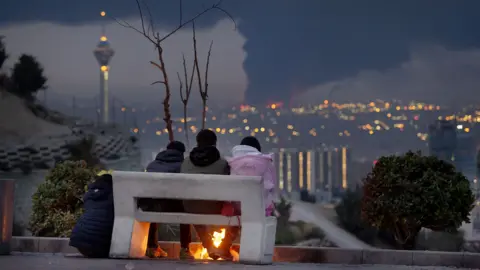
The striking image of Mariia, Serhii, and Eva encapsulates their battle against the backdrop of conflict. As a family originally from Kherson, who briefly sought refuge in Germany, they have returned to Ukraine with hopes of stability, now overshadowed by the threat of further aggression.
With key ports vital to Ukraine's economy suffering attacks and power cuts, many residents are now questioning their next steps. Will they remain steadfast in Odesa, or seek safety once more? As electricity and heating become scarce amid a bitter winter, the choices grow harder, reflecting a broader struggle faced by countless Ukrainians caught in the crossfire.
While Odesa's historical significance is being tested by Russian aspirations, local authorities are working diligently to reforge its identity away from imperial ties and towards a resolute Ukrainian future. The resilience of its people, symbolized by families like Mariia's, remains a beacon of hope even in the face of relentless attacks.
Despite nearly four years of conflict following Russia's invasion, Odesa, Ukraine's third-largest city, has recently faced a wave of renewed drone attacks targeting critical infrastructure. The situation has created a profound sense of unease among residents who now contemplate an uncertain future amid diminishing safety.
The striking image of Mariia, Serhii, and Eva encapsulates their battle against the backdrop of conflict. As a family originally from Kherson, who briefly sought refuge in Germany, they have returned to Ukraine with hopes of stability, now overshadowed by the threat of further aggression.
With key ports vital to Ukraine's economy suffering attacks and power cuts, many residents are now questioning their next steps. Will they remain steadfast in Odesa, or seek safety once more? As electricity and heating become scarce amid a bitter winter, the choices grow harder, reflecting a broader struggle faced by countless Ukrainians caught in the crossfire.
While Odesa's historical significance is being tested by Russian aspirations, local authorities are working diligently to reforge its identity away from imperial ties and towards a resolute Ukrainian future. The resilience of its people, symbolized by families like Mariia's, remains a beacon of hope even in the face of relentless attacks.