In brief
Since the start of the Ukraine war, Russia's wealthiest individuals have seen their power diminish under Vladimir Putin's rule. This article delves into how Putin's grip on the oligarchs has tightened, leaving them silent and compliant, even as their fortunes fluctuate dramatically.
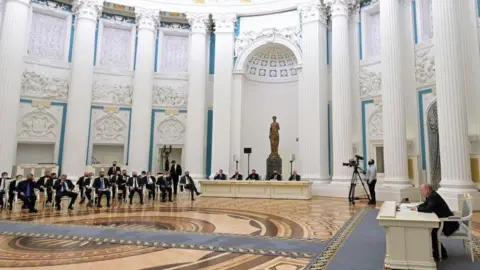
During the war with Ukraine, the number of billionaires in Russia has reached an all-time high. But in the 25 years Vladimir Putin has been in power, Russia's rich and powerful - known as oligarchs - have lost almost all their political influence. All this is good news for the Russian president. Western sanctions have failed to turn the uber-rich into his opponents, and his carrot-and-stick policies have turned them into silent backers.Former banking billionaire Oleg Tinkov knows exactly how the sticks work. The day after he criticised the war as 'crazy' in an Instagram post, his executives were contacted by the Kremlin. They were told his Tinkoff Bank, Russia's second-largest at the time, would be nationalised unless all ties to its founder were cut. 'I couldn't discuss the price,' Tinkov told the New York Times. 'It was like a hostage - you take what you are offered. I couldn't negotiate.' Within a week, a company linked to Vladimir Potanin - currently Russia's fifth-richest businessman - announced that it was buying the bank for only 3% of its true value. In the end, Tinkov lost almost $9bn and left Russia.This is a far cry from the way things were before Putin became president. In the years following the break-up of the Soviet Union, some Russians became fabulously rich by exploiting the opportunities of their country's nascent capitalism. Their wealth brought them influence during a period of political upheaval, leading them to be known as oligarchs.On February 24, 2022, when Putin ordered the full-scale invasion of Ukraine, he gathered Russia's richest in the Kremlin. 'I hope that in these new conditions, we’ll work together just as well,' he said. The meeting was characterized by billionaire attendees looking 'pale and sleep-deprived.' According to Forbes, the number of billionaires in Russia dropped from 117 to 83 in the immediate aftermath of sanctions and conflict, collectively losing $263bn.Yet, as the war economy has developed, immense benefits have emerged for those loyal to the Kremlin. By 2024, over half of Russia's billionaires either were involved in supplying the military or benefited from defense contracts, creating a new cadre of influential figures.Ultimately, while sanctions were intended to diminish their power and loyalty to Putin, they have instead solidified their role within his war economy. For many Russian billionaires, allegiance to the Kremlin has become a matter of survival.