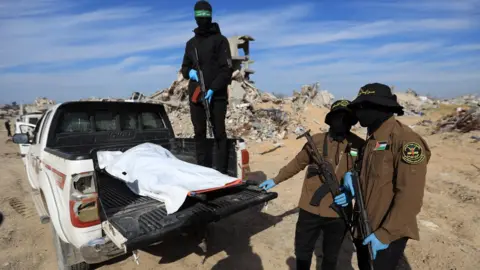
A three-year-old girl was killed by Israeli forces in Gaza on Sunday, according to local sources inside the Palestinian territory.
Ahed Tareq Al-Bayouk was reportedly playing near her family's tent in Mawasi, Rafah, southern Gaza, when she was shot.
The Israel Defense Forces said in a statement that it was not aware of a strike but would conduct an additional review as more information was provided.
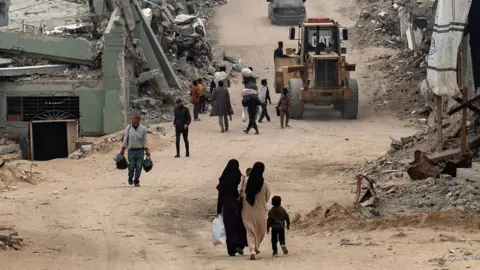
At least 136 children have been killed in Gaza since a ceasefire came into effect on 10 October, according to Amnesty International. The BBC is prevented by Israel from reporting independently from inside Gaza.
Ahed Al-Bayouk's death appears to have taken place on the Palestinian side of the so-called Yellow Line, behind which Israeli troops agreed to withdraw as part of the first phase of a US plan to end fighting in the region.
Phase one also required the return of all 20 living and 28 dead hostages taken in the Hamas-led attack on southern Israel on 7 October 2023.
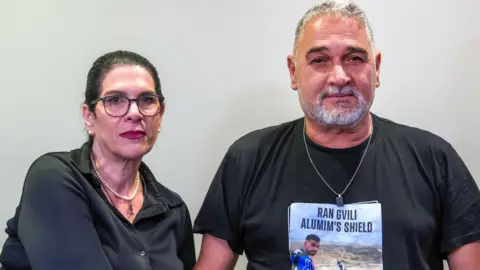
All have been returned except for the remains of Israeli police officer Ran Gvili, 24, who is believed to have been shot and killed while trying to repel the attack in which about 1200 people were killed and 251 taken hostage.
Since then, the Hamas-run health ministry in Gaza reported that more than 70,000 Palestinians have been killed by Israeli military action.
The World Health Organization stated that at least 16,500 wounded or seriously ill Palestinians are in urgent need of evacuation for lifesaving medical treatment outside Gaza.
On Saturday, Sheikh Mohammed bin Abdulrahman al-Thani, the prime minister of Qatar, described the current situation as more of a pause than a ceasefire and emphasized efforts with the US, Turkey, and Egypt to advance to phase two.
This phase would involve establishing an interim governing authority in Gaza, deploying an international security force, disarming Hamas, and the eventual withdrawal of Israeli forces.
These plans are to be overseen by a Board of Peace chaired by US President Donald Trump, which also intends to clarify pathways to Palestinian self-determination and statehood.
Following discussions in Jerusalem, German Chancellor Friedrich Merz suggested that creating a Palestinian state could lead to a new Middle East, while Israeli Prime Minister Benjamin Netanyahu opposed the two-state solution, citing concerns about Israel’s security.
Netanyahu and Merkel agreed that the second phase of the American plan should be advanced once Mr. Gvili’s remains are returned.
Netanyahu is set to discuss the next steps of the plan when he meets Trump in the US on December 29.