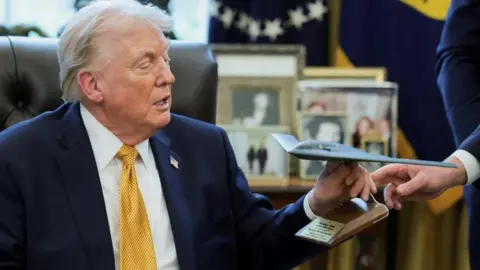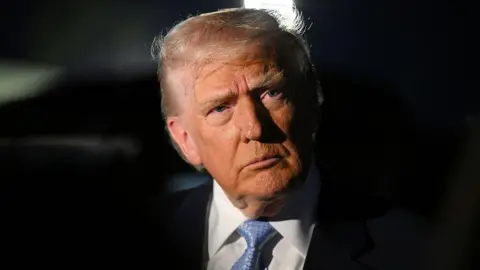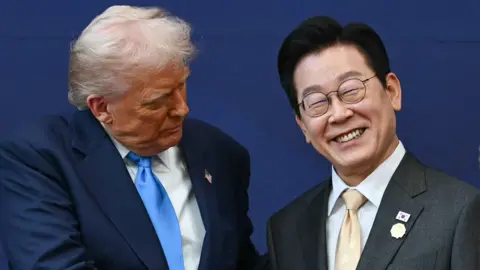
US President Donald Trump has announced he is raising tariffs on South Korean imports to 25% after accusing Seoul of 'not living up' to a trade deal reached last year.
In a post on social media, Trump stated that levies on South Korea would increase from 15% across a range of products including automobiles, lumber, pharmaceuticals, and 'all other Reciprocal TARIFFS'.
South Korean officials expressed concern, noting they had not received official notice of the tariff hike and were seeking urgent talks with Washington. South Korea's Industry Minister Kim Jung-kwan plans to visit the U.S. promptly for discussions.
The countries had previously agreed on a deal which included a pledge from South Korea to invest $350 billion in the U.S. The deal is awaiting review in South Korea's National Assembly and is expected to be passed in February.
The raised tariffs may impose a heavy tax on U.S. companies importing goods from South Korea, a strategy Trump has used to leverage foreign policy during his presidency. This follows threats against Canada regarding tariffs if they engage in trade with China, underlining a trend of escalating tensions in international trade relations.
In a post on social media, Trump stated that levies on South Korea would increase from 15% across a range of products including automobiles, lumber, pharmaceuticals, and 'all other Reciprocal TARIFFS'.
South Korean officials expressed concern, noting they had not received official notice of the tariff hike and were seeking urgent talks with Washington. South Korea's Industry Minister Kim Jung-kwan plans to visit the U.S. promptly for discussions.
The countries had previously agreed on a deal which included a pledge from South Korea to invest $350 billion in the U.S. The deal is awaiting review in South Korea's National Assembly and is expected to be passed in February.
The raised tariffs may impose a heavy tax on U.S. companies importing goods from South Korea, a strategy Trump has used to leverage foreign policy during his presidency. This follows threats against Canada regarding tariffs if they engage in trade with China, underlining a trend of escalating tensions in international trade relations.