Taiwan has insisted it is a sovereign, independent nation, after US President Donald Trump cautioned it against formally declaring independence from China.
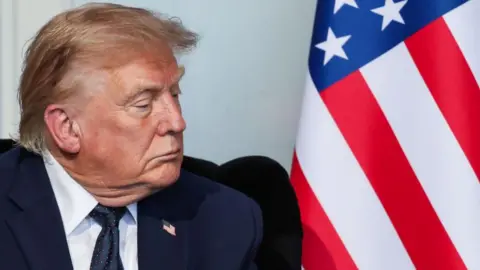
Trump's remarks came after a two-day summit in Beijing, where he stated he had made no commitment either way about the self-governing island, which China claims as part of its territory and has not ruled out taking by force.
Following talks with Chinese President Xi Jinping, Trump announced he would soon decide on an $11 billion arms package for Taiwan.
The US has a legal obligation to provide Taiwan with means of self-defence, yet must balance this with its relationship with China.
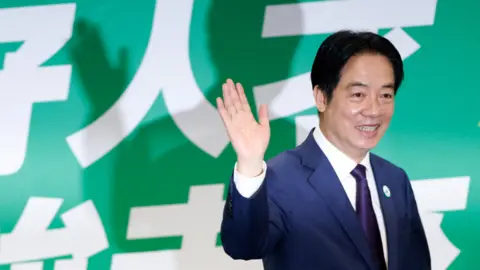
Taiwanese President Lai Ching-te affirmed that Taiwan sees itself as already independent, without the need for a formal declaration. Spokesperson Karen Kuo noted it is self-evident that Taiwan is a sovereign, independent democratic country, while also maintaining a commitment to the status quo relation with China.
Despite the clamor for maintaining their current status, many Taiwanese consider themselves part of a separate nation.
Washington does not officially support Taiwanese independence, stating that its relations with Beijing depend on the acceptance of one government of China.
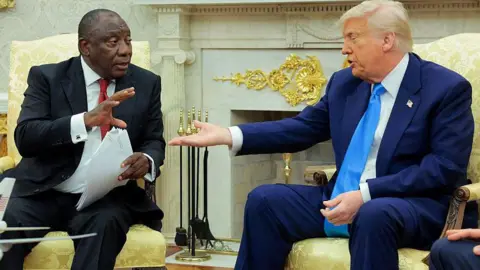
In an interview post-summit, Trump reiterated US policy on Taiwan has not changed, seeking no conflict with Beijing. He underlined his desire for both sides to cool down, indicating resistance against open independence movements.
Military drills around Taiwan have increased in recent years, raising regional tensions, as Trump contemplates the forthcoming US arms sale, reinforcing commitments with Taiwan's leadership.
Our nation is grateful to President Trump for his continued support for security in the Taiwan Strait, a Taiwanese spokesman stated, assuring plans for deeper cooperation with the US to secure stability in the region.