In brief
The US government has announced it will end funding for HIV/AIDS programmes in South Africa, a country that is already battling the highest number of HIV infections worldwide. The decision follows a series of disputes over alleged racial policies and a strained relationship with the Trump administration. South Africa’s health ministry says it has been working on a self‑reliance plan, though it continues to receive separate funding for antiretrovirals. The move may leave over 8 million people without critical support as international aid dries up.
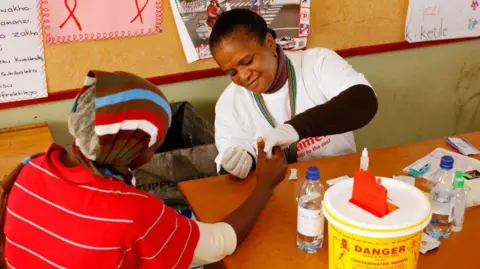
The U.S. government announced today that it will stop funding programmes in South Africa aimed at tackling the spread of HIV and AIDS.
More than eight million South Africans are living with HIV – the highest number of any country in the world.
The U.S. State Department linked the decision to South Africa’s alleged failure to protect the white‑minority Afrikaner community – an allegation the South African government has repeatedly rejected.
South Africa’s health ministry responded that it had not been informed of this decision but was already working on a self‑reliance plan.
Until 2025, the U.S. supported South Africa’s efforts to combat HIV with an estimated $400 million a year through the President’s Emergency Fund for AIDS Relief (PEPFAR).
Since the inauguration of President Donald Trump, relations between the two countries have increasingly soured. In February 2025, Trump issued an executive order alleging that numerous South African policies dismantled equal opportunities and fueled violence against racially disfavored landowners.
The executive order also highlighted South Africa’s case against Israel at the International Court of Justice and its alleged links to Iran.
The White House stated that, given these "unjust and immoral practices", further aid to South Africa would not be provided.
Trump has also falsely alleged a "white genocide" in South Africa, which has led to a refugee programme for Afrikaners – descendants of western Europeans who settled in southern Africa in the 17th Century.
The genocide claim has been widely discredited.
PEPFAR funding, which had provided about a fifth of South Africa’s total spending on HIV programmes, received a temporary reprieve last October through a "bridge plan." However, a U.S. State Department official confirmed that a "phased drawdown" of PEPFAR funding would now start.
The rationale is to "foster self‑reliance" and reduce dependency on American funding, noting that South Africa is a middle‑income country capable of supporting its own health programs.
South Africa’s health ministry said that while PEPFAR contributed to the HIV programme, the provision of life‑saving antiretroviral drugs was funded separately, mostly by the government.
Attempts to mend U.S.–South Africa relations have floundered, including a high‑profile White House meeting between Trump and South African President Cyril Ramaphosa, and the U.S. boycott of the G20 meeting hosted by South Africa last November.