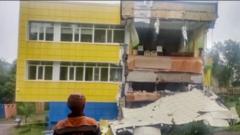
On Wednesday, an 8.8 magnitude earthquake rocked near Russia’s Kamchatka Peninsula at 11:25 AM local time (00:25 BST), sparking widespread tsunami alerts across the Pacific. Over two million people, especially in Russia, Japan, and Hawaii, were prompted to evacuate as wave warnings loomed. Despite the quake's intensity, no severe injuries or widespread damage have been reported.
In Hawaii, waves reached 1.2 meters on Oahu and 1.7 meters on Maui, leading to evacuations to higher ground. Hawaii’s Governor Josh Green stressed the danger of tsunamis, saying they can be deadly, but later noted that "so far, no significant wave has occurred." The Pacific Tsunami Warning Centre downgraded Hawaii from a tsunami warning to an advisory, cautioning of minor flooding and strong currents.
The quake led to minor tsunami impacts along the U.S. West Coast, with waves in Crescent City measuring up to 1.09 meters. Canadian officials initially issued a tsunami advisory that was later lifted. In Russia, towns like Severo-Kurilsk faced 5-meter tsunami waves, prompting evacuations, but initial assessments indicated no major injuries.
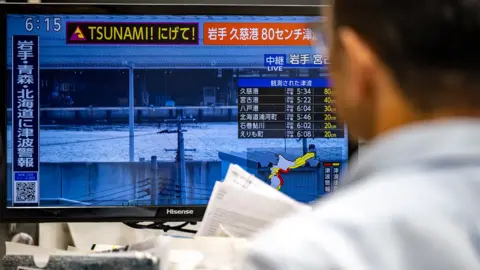
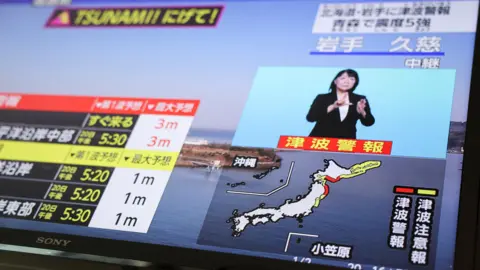
Japan also felt the quake’s effects, with tsunami sirens alerting residents as waves over one meter struck its shores. Authorities swiftly downgraded the warning, confirming no damage reports. At the Fukushima nuclear plant, workers were safely evacuated without any anomalies detected.
Tsunami alerts were issued for islands across the Pacific, including French Polynesia and Papua New Guinea, with some evacuations necessary. Alerts were later lifted in various regions like China, the Philippines, and Taiwan, as threats receded.
The earthquake, one of the most powerful in recent decades, occurred in the Pacific Ring of Fire, where about 80% of the world's seismic activity takes place. As the region returns to normal, people are now cautiously resuming their routines.