In brief
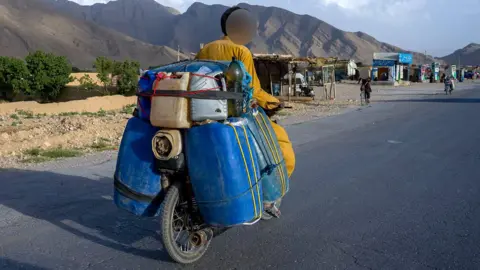
Fuel smuggled from Iran to Pakistan’s Balochistan region has surged amid the US‑Israel war, forcing riders like Mazaar to carry massive plastic canisters through deadly heat. The canisters, strapped to a worn bike, risk ignition as extreme temperatures swell plastic and loosen lids. In addition to fire risks, these smugglers navigate political tensions where Pakistani authorities sometimes turn a blind eye for bribes while battling border security challenges. The transport fuels a local economy desperate for cheap energy, but leaves riders in peril and governments tight‑fisted on crackdown.
In Balochistan’s blistering heat, a small motorbike named Mazaar carries five 70‑litre oil containers, weighing about 272 kg, strapped by rope and string on his worn bike. The journey covers 350 km (220 miles) to Sindh, in a region that faces water shortages and battles between Pakistani forces and separatist insurgents. Each canister’s plastic swells in the 50 °C (120 °F) temperatures, raising the danger of fire or explosion—risks that have claimed many smugglers’ lives.
The smuggling trade has intensified since the US‑Israel war cut oil flows through the Strait of Hormuz, driving up fuel prices. According to leaked Pakistani intel, the value of fuel smuggled from Iran to Pakistan could be around $1 bn annually. While official refineries report a 27‑year low in petrol sales, the clandestine market fills the void.
Safety is a major concern: the high heat causes plastic canisters to expand, and the risk of a cracked seal can trigger flames. Smugglers like Mazaar are forced to keep moving, often under threat of armed conflict and the possibility of being caught by customs. Meanwhile, Pakistani authorities have at times cracked down, seizing fuel worth about 1.3 billion rupees ($5 m) last year, yet the remote border makes complete enforcement impossible.
The economic reality is stark; without farming due to drought, Mazaar now earns roughly 3,000 rupees (about $13) a day—twice Pakistan’s minimum wage—yet the price he pays for smuggled petrol has climbed without a corresponding rise in sale price. The war has intensified costs and lowered earnings, underscoring the harsh choices many residents face.