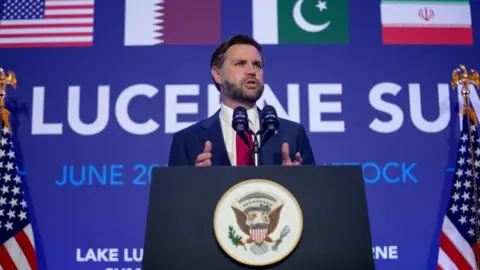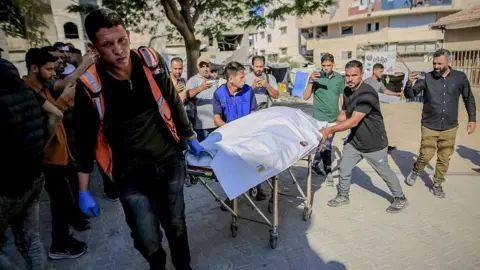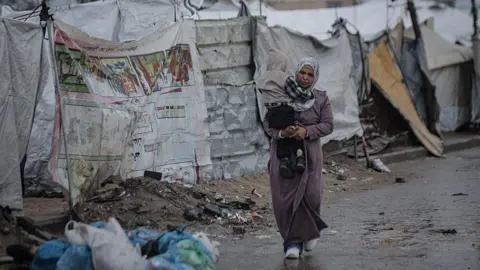
Nearly six months post-ceasefire, Gaza's struggles continue with rising prices and food shortages, causing despair among its residents. The Iranian conflict has diverted global attention from Gaza, while shoppers express their frustration over doubled prices and disrupted supplies. Calls for peace are stymied by Hamas's likely rejection of disarmament proposals linked to reconstruction efforts. Despite a framework presented at the UN for peace and disarmament, skepticism grows about its implementation.
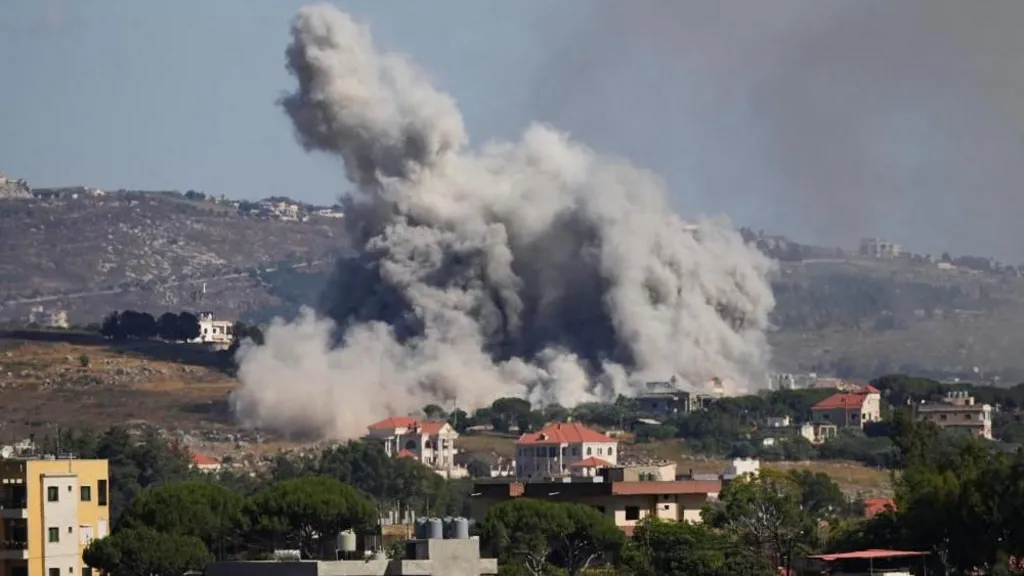
Residents have reported that the conflict has caused aid shortages, further hampering efforts to rebuild essential infrastructure devastated by previous conflicts. Meanwhile, Israeli strikes continue in the area, raising fears of a full military offensive. Gaza appears increasingly isolated and overlooked as the international community focuses on the complexities of the Iran-Israel situation.
Additionally, Hamas has reinvigorated its control, imposing new structures and taxes, adding to the burden of the Gazan population. With the new technocratic committee formation aimed at governance, many remain doubtful about its efficacy in instigating real change. As calls for peace grow, the potential for Hamas's acceptance versus the ongoing military tension remains uncertain.
Residents have reported that the conflict has caused aid shortages, further hampering efforts to rebuild essential infrastructure devastated by previous conflicts. Meanwhile, Israeli strikes continue in the area, raising fears of a full military offensive. Gaza appears increasingly isolated and overlooked as the international community focuses on the complexities of the Iran-Israel situation.
Additionally, Hamas has reinvigorated its control, imposing new structures and taxes, adding to the burden of the Gazan population. With the new technocratic committee formation aimed at governance, many remain doubtful about its efficacy in instigating real change. As calls for peace grow, the potential for Hamas's acceptance versus the ongoing military tension remains uncertain.