In brief
The late David Hockney, famed for vivid landscapes and pioneering iPad portraits, passed away at 88. King Charles, Tracey Emin, Tim Cook and Sadiq Khan among others offered heartfelt tributes, highlighting his influence on contemporary art and public life. The piece traces Hockney’s career from Yorkshire scenes to Californian pools, his playful use of technology, and his lasting impact on modern creativity.
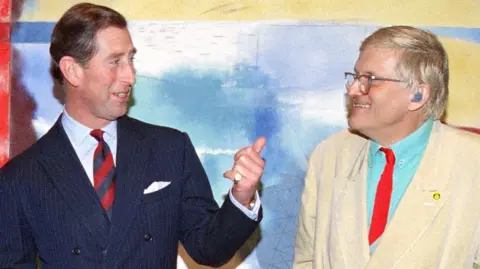
King Charles has officially paid tribute to the late David Hockney, one of Britain’s most celebrated artists, who died at the age of 88 last week.
In a personal message from the King, he thanked the artist as “a dear friend” and said that both he and the Queen were “greatly saddened” by his passing. The King noted Hockney’s strong ties to Yorkshire and praised his “inspiration to so many.”
Artist Dame Tracey Emin echoed the sentiment, describing Hockney as “a groundbreaking figure” who “changed the perception of Britishness” and celebrated his flamboyant style.
Over a seven‑decade career, Hockney painted vibrant Yorkshire landscapes, the sun‑lit Californian pools of the 1960s, and, later, interactive iPad portraits that pushed the limits of digital art. His work split into bright, almost child‑like canvases and more mature, contemplative studies of space and vision.
Leaders in politics and culture offered similar praise. Prime Minister Keir Starmer called him “one of Britain's most celebrated artists,” while London Mayor Sadiq Khan described him as “a true icon and revolutionary” whose colour palette helped people see the world’s fragility.
Tech entrepreneur Tim Cook took time to thank Hockney on X, noting that the artist “turned the iPad into a canvas for the most vibrant art of our time,” and “his legacy will inspire us all to see the world a little more beautifully.”
In addition to his famous “Swimming Pool” series, Hockney is known for portraiture like “Mr and Mrs Clark and Percy” and for his exploration of light in landscapes such as the Grand Canyon. His experimental approach to subject matter cemented him as a pioneer of contemporary British art.
The artist’s death marks a significant moment for both the art community and broader society, with tributes spotlighting his fearless innovation, his advocacy for queer visibility and his commitment to life‑affirming beauty.
Hockney’s estate will continue to collaborate with the Tate to stage a life‑time exhibition spanning seven decades, and a multimedia installation at the Turbine Hall is planned for next year. His vibrant canvases and intellectual curiosity will remain a source of inspiration.